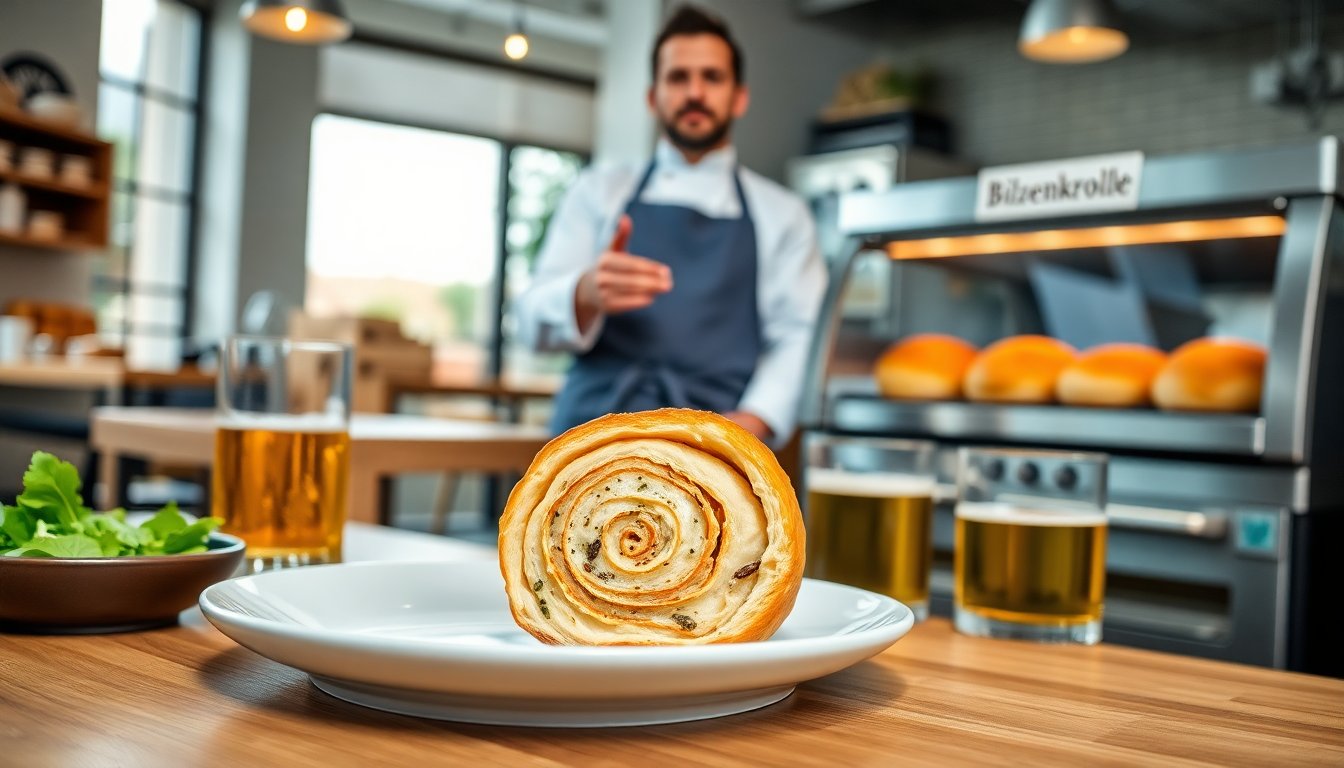

Bilzenkrolle appears as a small savory roll that many enjoy. The bilzenkrolle offers a crisp exterior and a soft center. The bilzenkrolle pairs well with tea, beer, or a light salad. This guide gives clear facts about the bilzenkrolle, its history, how it is made, and where to buy it.
Table of Contents
ToggleKey Takeaways
- The bilzenkrolle is a savory yeast roll with a crisp exterior and soft, flavorful filling, commonly enjoyed as a snack or side dish.
- Originating in the late 19th century, the bilzenkrolle holds cultural significance as a portable comfort food popular among farmers and tradespeople.
- Traditional bilzenkrolle dough includes flour, water, yeast, salt, and fat, with fillings like cheese, herbs, or meat, creating a unique texture contrast.
- Regional variations of the bilzenkrolle incorporate local ingredients such as smoked fish, cured ham, or vegetarian options like mushrooms and spinach.
- Bilzenkrolle is widely available in local bakeries, markets, cafes, and online, and is also easy to make at home with basic ingredients and less than two hours of preparation.
- Choosing to make bilzenkrolle at home allows customization of fillings, while purchasing frozen options offers convenience without sacrificing quality.
What Is Bilzenkrolle? A Simple, Savory Overview
The bilzenkrolle is a small yeast roll filled with savory ingredients. It looks like a tight spiral or a compact cigar. People eat the bilzenkrolle as a snack or as a side dish. Bakers often shape the bilzenkrolle by rolling dough around a filling. The bilzenkrolle bakes until the outside turns golden and slightly crisp. The bilzenkrolle offers a contrast of textures: flaky outer layers and a moist filling. The bilzenkrolle often contains cheese, herbs, or minced meat. The bilzenkrolle keeps well for one to two days at room temperature. The bilzenkrolle rewarms nicely in a low oven or on a skillet.
History And Cultural Significance Of Bilzenkrolle
Local bakers created the bilzenkrolle in the late 19th century. Farmers and tradespeople favored the bilzenkrolle for its portability. Town markets helped spread the bilzenkrolle to neighboring regions. Families keep bilzenkrolle recipes as simple heirlooms. Street vendors later sold the bilzenkrolle as a quick meal. Festivals often feature the bilzenkrolle at food stalls. The bilzenkrolle became a regional symbol of comfort food. Food writers now highlight the bilzenkrolle in short features and recipe lists. Tourists often try the bilzenkrolle while exploring local bakeries. The bilzenkrolle has maintained steady local popularity into 2026.
Ingredients, Texture, And How Bilzenkrolle Is Made
A basic bilzenkrolle dough uses flour, water, yeast, salt, and a little fat. Bakers sometimes add milk or egg for a richer dough. The filling varies but often uses grated cheese, chopped herbs, or cooked meat. Bakers knead the dough until it feels smooth and elastic. They let the dough proof until it doubles in size. The baker rolls the dough thin and spreads the filling. Then the baker rolls the dough into a tight log and cuts individual rolls. The rolls proof briefly and then they bake at moderate heat. The bilzenkrolle comes out with a browned outside and a soft inner crumb. The filling melts and flavors the dough from the inside. The bilzenkrolle texture depends on dough hydration and oven heat.
Variations, Regional Twists, And Common Fillings
Regions adapt the bilzenkrolle with local ingredients. Coastal towns use smoked fish in the bilzenkrolle filling. Mountain towns add cured ham and strong cheese to the bilzenkrolle. Urban bakers add spices or pickled vegetables to the bilzenkrolle. Vegetarian versions use sautéed mushrooms, spinach, or roasted peppers in the bilzenkrolle. Some bakers make a sweeter bilzenkrolle with cinnamon and sugar. Street cooks sometimes brush the bilzenkrolle with butter and herbs after baking. The bilzenkrolle can be small and snack-sized or larger as a meal roll. Bakers often name the roll by its key filling, such as cheese-bilzenkrolle or meat-bilzenkrolle. Each variation keeps the same spiral form and the same basic bake method.
Where To Find Bilzenkrolle — Buying, Ordering, And Homemade Options
Local bakeries sell the bilzenkrolle in many towns. Markets often host stalls that offer fresh bilzenkrolle in the morning. Some cafes include bilzenkrolle on the savory pastry menu. Online shops sell frozen bilzenkrolle that customers can bake at home. Restaurants sometimes list bilzenkrolle as a side or appetizer. Home cooks can make the bilzenkrolle with basic pantry items. The recipe takes less than two hours from start to finish, including proofing. For a quick option, buy frozen bilzenkrolle and follow package directions. For control over flavor, make the bilzenkrolle at home and test new fillings. The bilzenkrolle remains easy to find in bakeries and to make at home, so shoppers can choose convenience or craft.