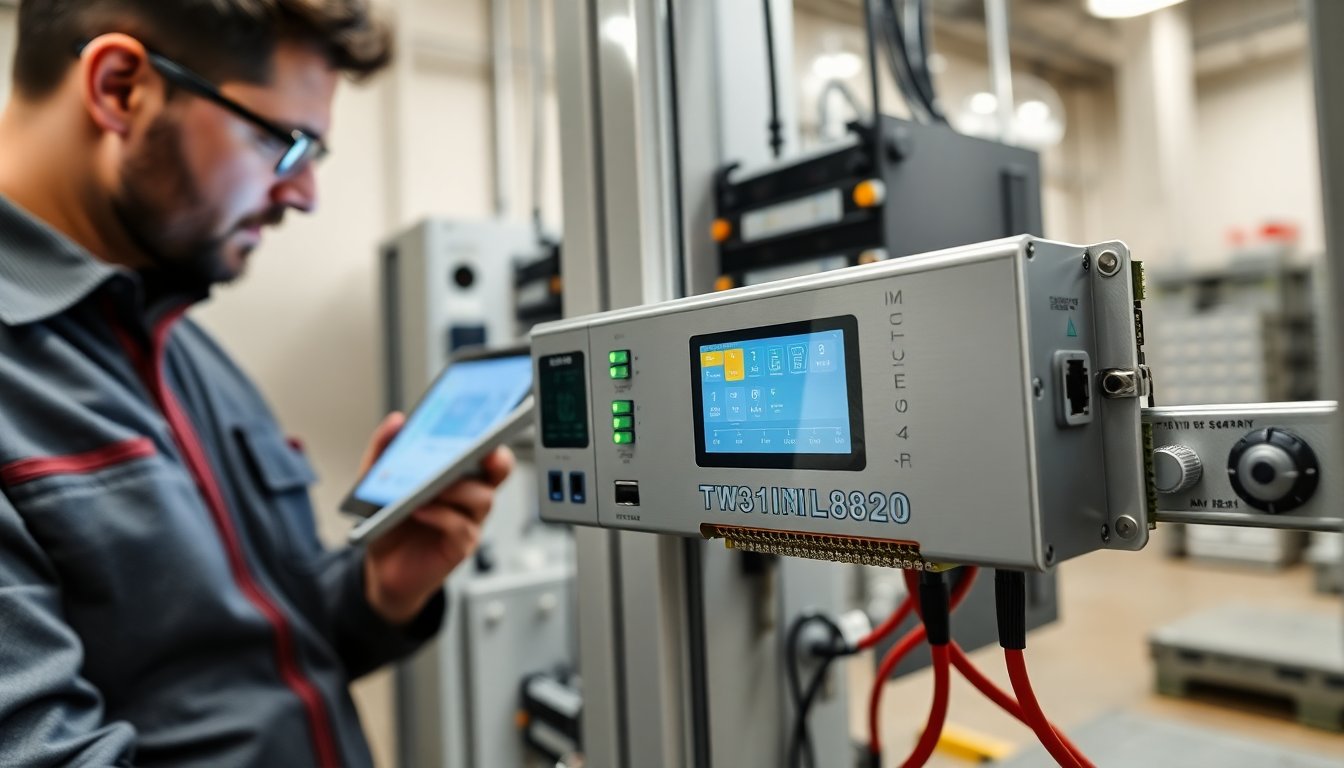

The TW31HNL820 is a compact control module for industrial automation. It collects sensor data, executes control logic, and sends status updates to a host system. Engineers choose the TW31HNL820 for small to mid-size installations that need reliable I/O, low latency, and long lifecycle support.
Table of Contents
ToggleKey Takeaways
- The TW31HNL820 is a reliable industrial control module featuring a 1.6 GHz quad-core processor with versatile I/O options ideal for small to mid-size automation projects.
- Users should carefully evaluate TW31HNL820 variants based on I/O needs, communication protocols, and environmental specifications to choose the right model for their application.
- Maintaining the TW31HNL820 involves regular firmware updates, I/O testing, and security patches to ensure optimal performance and reduce downtime.
- Comparing prices from authorized distributors, direct sales, and certified resellers helps find the best value while considering warranty and support for the TW31HNL820.
- Technicians should prepare spare parts and follow documented procedures to quickly troubleshoot and replace the TW31HNL820, minimizing operational interruptions.
- The TW31HNL820 supports common industrial protocols like Modbus TCP, OPC UA, and MQTT, making it compatible with modern automation and data systems.
What Is The TW31HNL820? Key Features And Technical Specifications
The TW31HNL820 is a modular controller that handles I/O, protocol conversion, and basic edge compute tasks. It uses a 1.6 GHz quad-core processor, 2 GB RAM, and 16 GB flash storage. The device offers eight digital inputs, six digital outputs, and two analog inputs by default. It supports Ethernet, RS-485, and optional Wi‑Fi modules.
The TW31HNL820 runs a lightweight real-time operating system. It boots in under 8 seconds and resumes operation after faults automatically. The module includes hardware watchdog and surge protection for all I/O lines. It meets IP20 enclosure ratings and operates between -20°C and 60°C. Power input accepts 9–36 VDC with a typical consumption of 5 W.
Interface options for the TW31HNL820 include an OLED status panel, LED indicators for each I/O channel, and a USB-C service port. The device supports common protocols such as Modbus TCP, OPC UA, and MQTT. Firmware updates occur over-the-air or via the USB-C port. Security features include secure boot, code signing, and TLS for data transport.
In practice, the TW31HNL820 fits use cases such as small conveyor control, remote pump sequencing, and local data aggregation. Technicians value the clear status indicators and the predictable failure modes. Buyers often compare the TW31HNL820 to similar controllers based on processing speed, I/O count, and long-term firmware support.
How To Evaluate And Choose The Right TW31HNL820 Variant For Your Needs
Users should list their functional requirements before selecting a TW31HNL820 variant. They must specify how many inputs and outputs they need, which communication protocols matter, and whether they need wireless. They must also confirm operating temperature range and enclosure needs.
Next, compare the available TW31HNL820 variants by I/O count, add-on modules, and certification level. One variant focuses on extra analog inputs. Another variant adds isolated RS-485 ports. A third variant includes integrated Wi‑Fi and cellular options. The vendor publishes a clear matrix for each model and shows the supported firmware features.
Buyers should verify vendor support for firmware updates for at least five years. They should confirm spare-part availability and ask about repair or exchange policies. For critical sites, they should consider purchasing a small stock of replacement TW31HNL820 units. They should also request performance benchmarks and test firmware in a lab before field deployment.
Cost matters. Users should calculate total cost of ownership for each TW31HNL820 variant. They should include device price, optional modules, installation labor, and maintenance. They should also include any gateway or cloud fees. The cheapest TW31HNL820 can cost less up front but require more maintenance.
Risk assessment helps finalize a choice. Teams should list single points of failure and mitigation steps. They should confirm whether the TW31HNL820 supports redundant configurations. Where possible, they should choose a variant that reduces manual intervention in case of faults.
Comparing Models, Pricing, And Where To Buy
Manufacturers price TW31HNL820 models by feature set and certification. Baseline models with basic I/O and Ethernet tend to cost less. Models with cellular, expanded analog channels, or industrial certifications cost more. Distributors and direct vendors list MSRP and volume discounts for the TW31HNL820.
Buyers should compare three sources before purchase: authorized distributors, direct factory sales, and certified resellers. Authorized distributors often hold stock of the TW31HNL820 and ship quickly. Direct factory sales can offer customization for the TW31HNL820 but add lead time. Certified resellers may bundle the TW31HNL820 with installation services.
Users should verify warranty terms for each TW31HNL820 offer. They should confirm whether the warranty covers firmware defects and whether returns are accepted. For large orders, buyers should request sample TW31HNL820 units for testing to ensure compatibility with existing systems.
Price negotiation can reduce the effective cost of the TW31HNL820. Buyers should ask for bundled pricing that includes spare parts and scheduled support. They should also request a clear list of optional accessories for the TW31HNL820 so they can compare total package prices across vendors.
Maintenance, Troubleshooting, And Compatibility Tips
Technicians should create a regular maintenance plan for each TW31HNL820. They should schedule firmware checks, I/O tests, and power supply inspections. They should log firmware versions and replace failing parts promptly. Regular backups of configuration files help restore a TW31HNL820 fast.
When a TW31HNL820 fails to boot, the technician should check power input, LED status, and the USB-C console for error messages. They should attempt a safe-mode boot if the TW31HNL820 supports it. If the device shows network faults, they should isolate the TW31HNL820 on a test switch and verify link status and IP settings.
For I/O issues, the technician should measure voltages and confirm wiring against the TW31HNL820 schematic. They should test sensors on a bench to remove wiring as a variable. When analog readings drift, they should perform a calibration cycle and compare values to a reference meter.
Compatibility checks matter before deployment. The integrator should verify protocol versions for the TW31HNL820 and update to compatible firmware. They should test MQTT topics, Modbus registers, and OPC UA node structures. They should confirm that cloud endpoints accept TLS versions used by the TW31HNL820.
Security maintenance matters. Teams should rotate service credentials for each TW31HNL820 and revoke unused certificates. They should apply security patches promptly and audit access logs. For remote TW31HNL820 units, they should use VPN or secure tunnels and disable unused services.
Spare parts planning reduces downtime. Sites should keep spare TW31HNL820 units, I/O daughterboards, and power supplies on hand. They should document a step-by-step swap procedure so technicians can replace a TW31HNL820 quickly and validate operation without extended downtime.